Make resistance usable
Translate familiar rehabilitation principles into a device that can be configured for facial movement patterns.
About ISO Metrik
ISO Metrik was founded to give clinicians and patients a more structured way to apply resistance, progression, and continuity to facial neuromuscular rehabilitation.

Founder origin
After experiencing facial weakness associated with a mini-stroke in 2012, inventor Capri McGhee encountered a familiar problem: facial recovery work could be difficult to standardize, progress, and continue outside therapy. That experience began years of device development focused on making resistance-based facial rehabilitation more practical for clinicians and patients.
Our mission
Translate familiar rehabilitation principles into a device that can be configured for facial movement patterns.
Build around evaluation, clinical judgment, safety, documentation, and planned progression.
Support continuity by carrying the provider’s device setup and exercise parameters into home practice.
Pair innovation with transparent research, careful claims, and meaningful clinical outcomes.
How the idea evolved
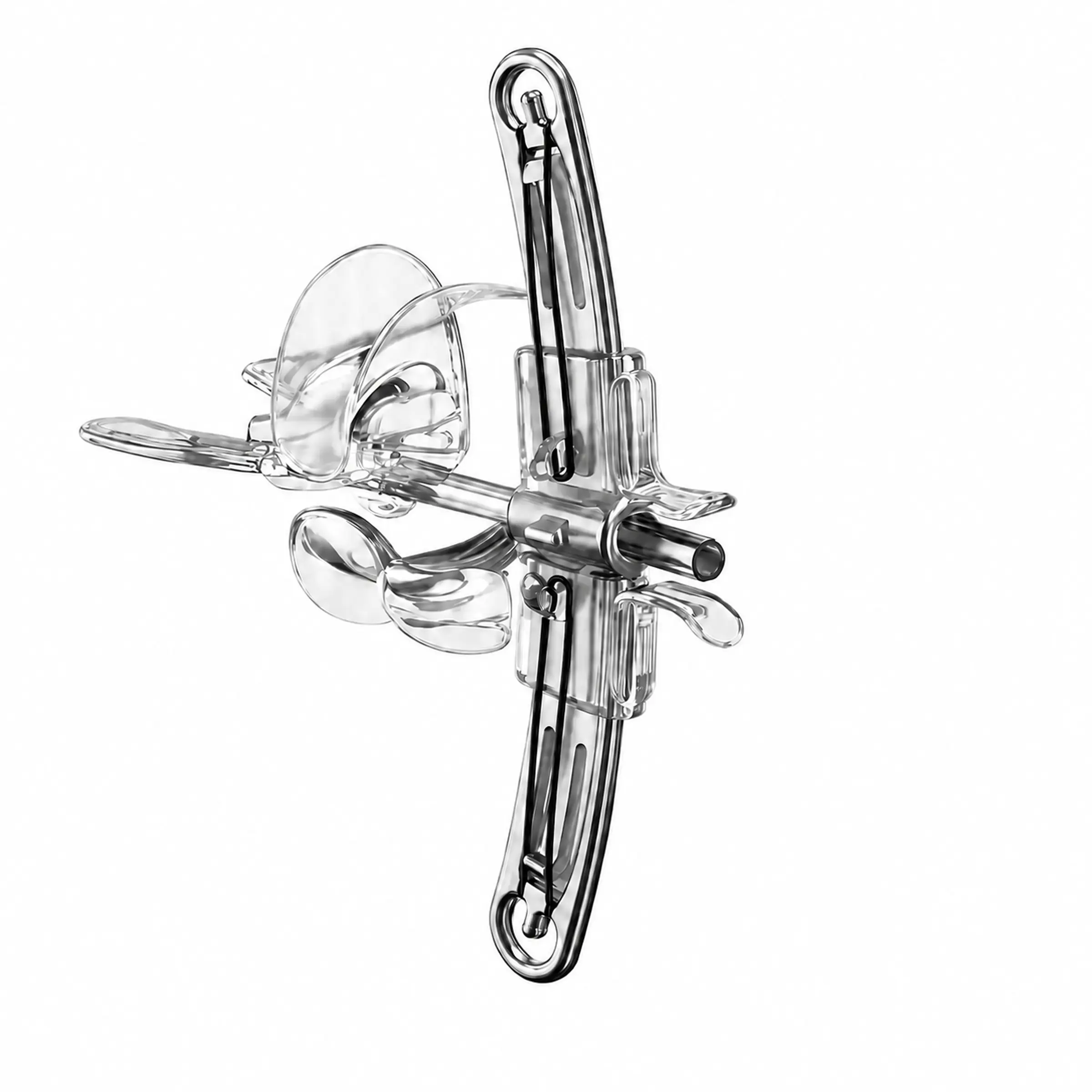
The device combines intraoral stability, indexed direction, movable lip contact, and adjustable resistance. The result is a platform intended to serve different movement axes, therapy modes, and provider-directed programs without losing the connection between clinic and home.
What guides us
Facial change can affect identity, communication, and confidence; the care experience must respect the whole person.
Products and programs should fit professional reasoning, safety, documentation, and multidisciplinary care.
A good plan should be teachable, repeatable, and understandable beyond a single appointment.
We distinguish design intent and scientific rationale from claims that require direct clinical proof.
Our vision
A defined pathway with professional guidance, meaningful goals, and a home plan connected to clinical care.
A configurable tool, common terminology, training, documentation, and progression framework.
A pilot-ready model that can connect service lines, referral networks, outcomes, and responsible research.
Next step
We welcome conversations with rehabilitation clinicians, referring providers, researchers, and health-system partners.