
Contoured bite plate
A clear intraoral foundation with three inserts supports individualized, repeatable positioning while the patient maintains the prescribed bite.
The ISO Metrik device
A provider-directed platform designed to deliver repeatable, adjustable resistance across multiple facial movement axes—inside the clinic and through a structured home program.
Designed for trained professional oversight. FDA 510(k) pending.
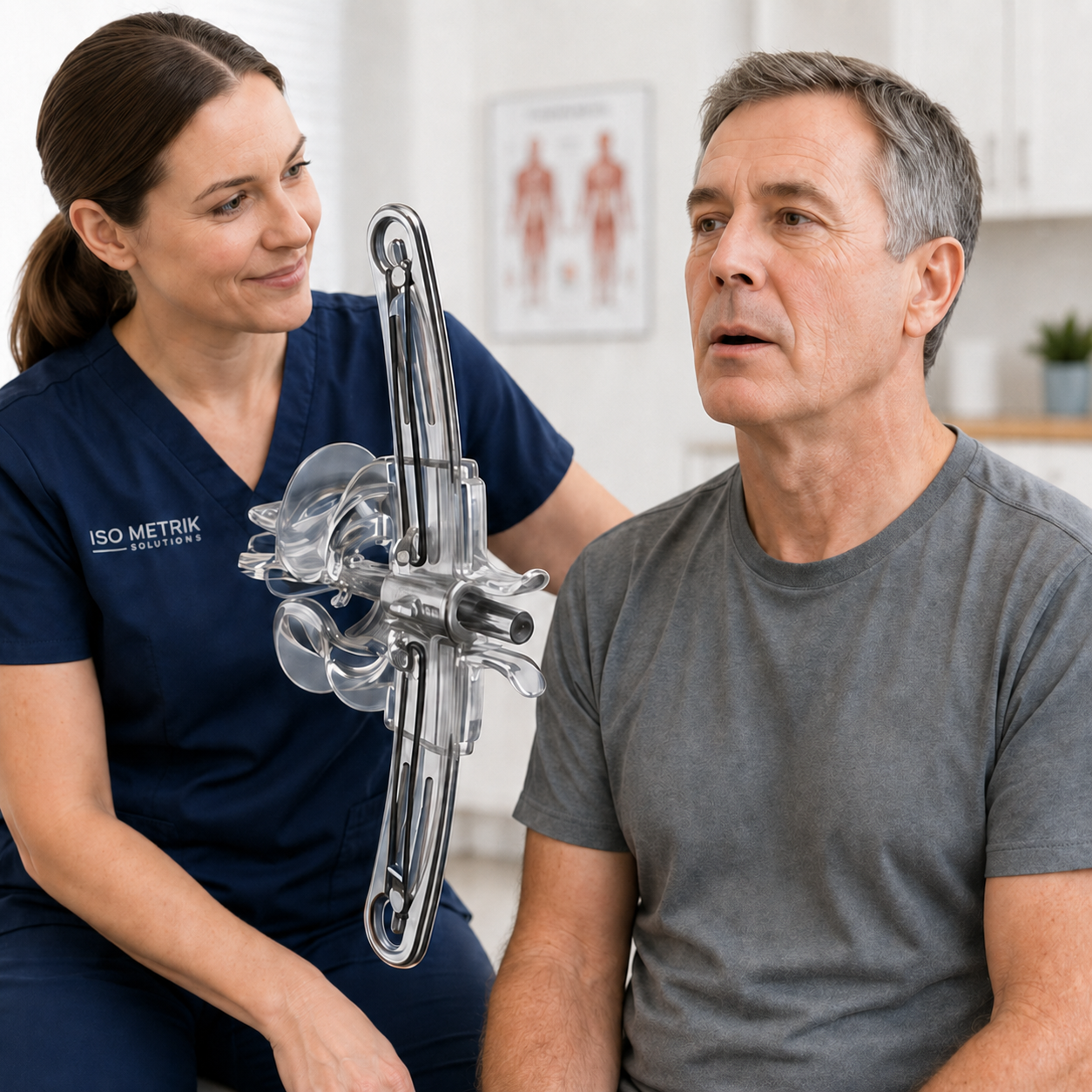
A different category of facial exercise
Many facial programs rely on unresisted movement or manual cueing. ISO Metrik gives the treating clinician a physical resistance platform that can be configured around direction, mode, and patient tolerance, then carried into a prescribed home program.
Device architecture
Each element supports secure positioning, controlled movement, and repeatable resistance delivery.
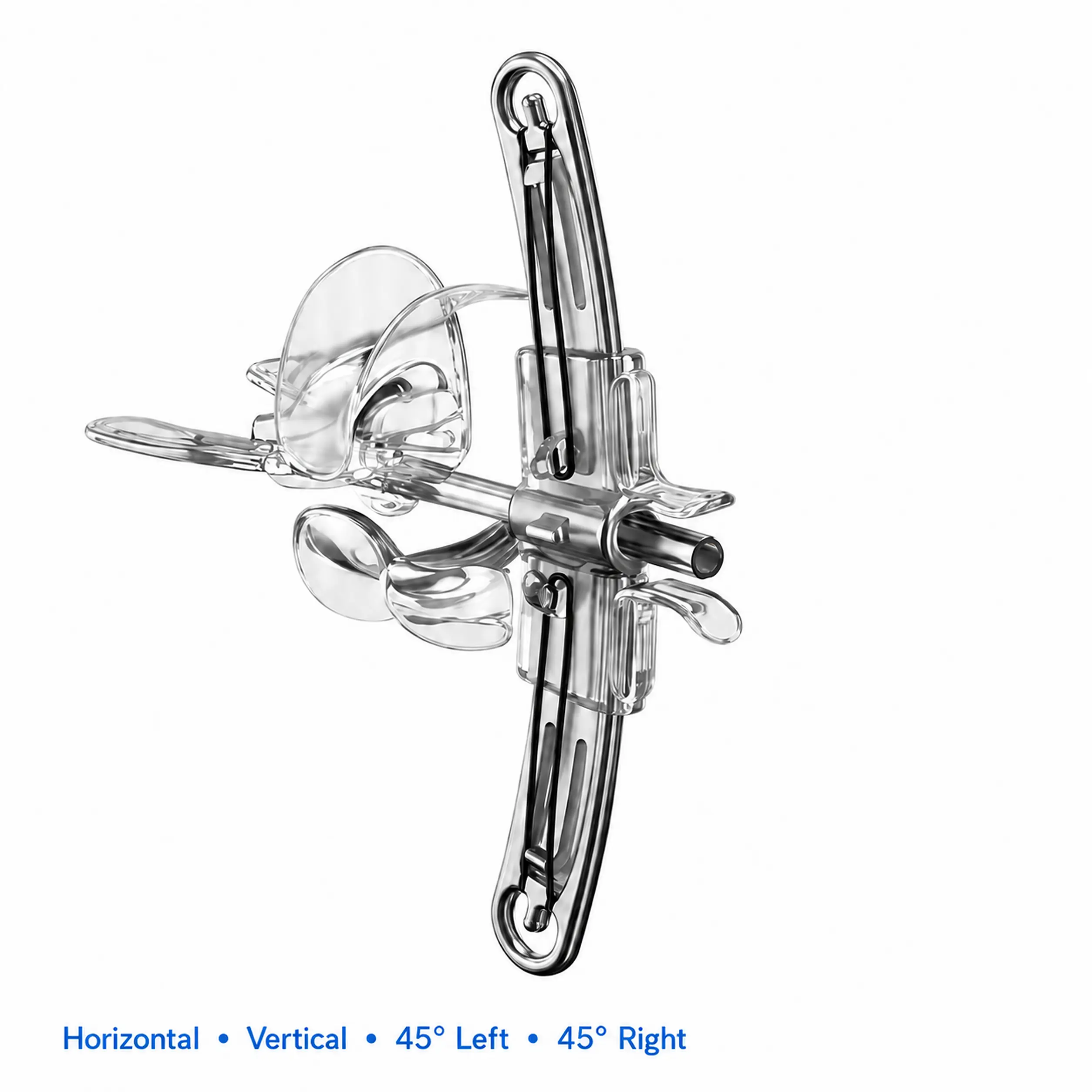
A clear intraoral foundation with three inserts supports individualized, repeatable positioning while the patient maintains the prescribed bite.
The curved central bar establishes the working axis and allows smooth, guided translation during dynamic exercise.
Left and right sliding holders use soft contact surfaces to engage the perioral region and adapt to anatomy and movement targets.
Integrated bands create an adjustable load. The provider selects the arrangement and progression for the intended exercise.
Indexed positioning
The indexed octagonal connector allows the glide bar to be repositioned without changing the core bite-plate relationship.
Three modes of therapy
The device is designed to support three familiar rehabilitation approaches. Mode, resistance, range, and dosage remain provider-directed.
The patient produces force against resistance without intended movement, supporting controlled activation and endurance.
The patient moves through a directed range against resistance to train strength, coordination, and motion.
The clinician prescribes and monitors a movement cadence while the patient actively regulates speed, direction, range, and control. The device does not mechanically maintain constant velocity.
Biomechanical intent
Device position and resistance are intended to challenge tissues associated with the mandible, maxilla, zygomatic region, and surrounding facial musculature.
Exercises may target lip closure, graded movement, symmetry, and coordinated activation around the mouth.
Diagonal and vertical configurations can be used to cue movement patterns involving the cheek and zygomatic region.
Repeated, task-specific practice gives the therapist a structured way to pair sensory input, movement intent, and feedback.
Next step
Review assembly, fit, orientations, therapy modes, resistance progression, and the clinic-to-home workflow with the ISO Metrik team.